Own the Future
Data-backed analysis of why Tier-2 and Tier-3 cities are India's most promising real estate investment opportunity.
While metro markets are saturated, Tier-2 & Tier-3 growth corridors are delivering 3–5× returns backed by massive infrastructure spending.
For decades, Tier-1 cities were the default choice for real estate investment. But today, the narrative has shifted. Skyrocketing entry costs, saturated land markets, traffic bottlenecks, and stagnant single-digit rental yields have fundamentally broken the math for middle-class investors in metros.
Concurrently, a massive demographic and corporate migration is underway. Driven by lower operational costs and government incentives, IT hubs, data centers, and manufacturing giants are relocating to Tier-2 and Tier-3 cities. This influx of capital and highly-skilled professionals creates an unprecedented demand for premium residential spaces—and astute investors are positioning themselves ahead of this curve.
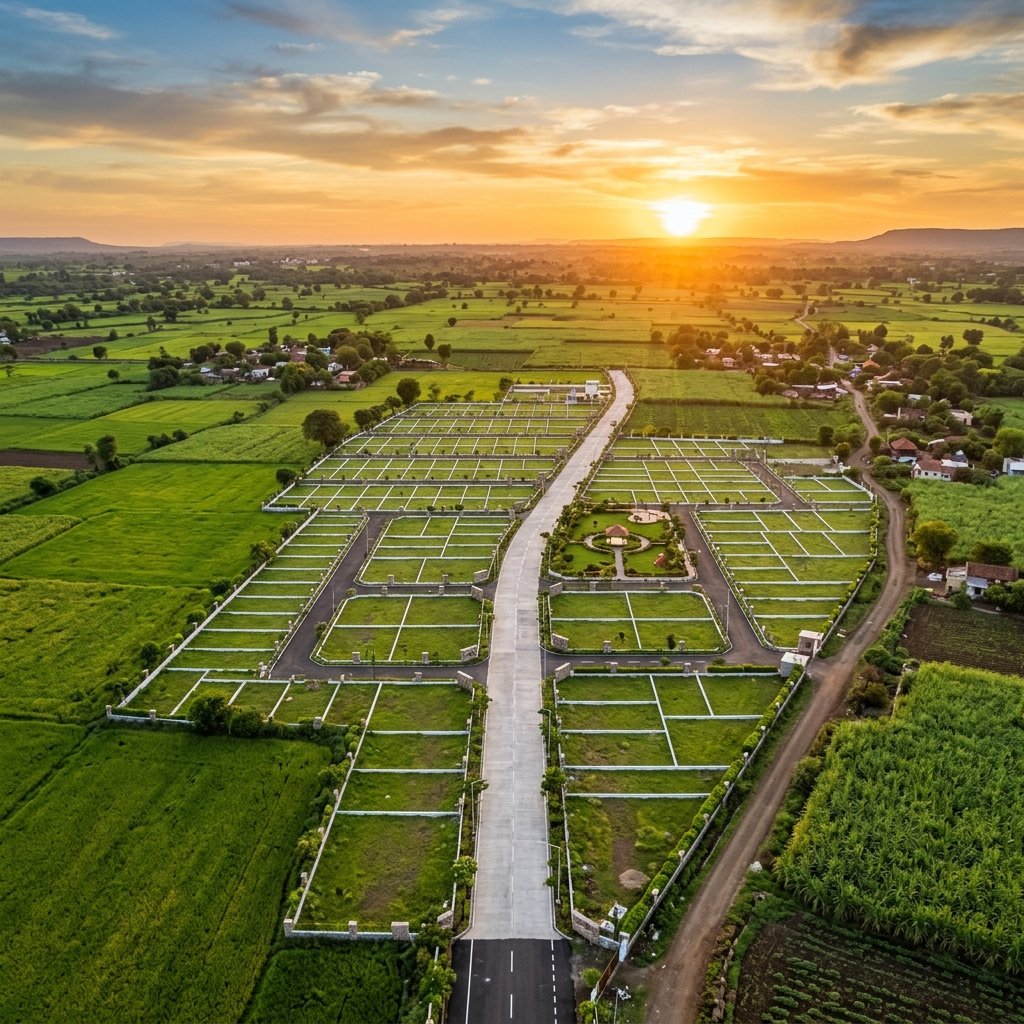
The National Infrastructure Pipeline (NIP) is heavily weighted toward non-metropolitan development. With the aggressive expansion of the UDAN scheme for airports and new expressways, Tier-2 cities are becoming seamlessly connected logistical hubs.
IT giants and multinational corporations are establishing massive Global Capability Centers (GCCs) in cities like Warangal. This shift severely reduces operational expenditure and drives rapid, sustained white-collar job creation.
Following the shift toward hybrid models, a massive reverse migration is occurring. Discerning professionals are seeking premium, spacious, and well-connected gated communities that offer urban luxury without metropolitan congestion.
Why plotted developments in emerging corridors are the ultimate wealth creation engine.
| Asset Characteristic | Plots in Tier-2/3 Corridors | Flats in Metro Cities |
|---|---|---|
| Entry Cost | Low (High Accessibility) | Extremely High |
| Asset Depreciation | Zero (Land only appreciates) | High (Building ages) |
| Expected ROI (5 Yrs) | 200% - 350%+ | 30% - 60% |
| Supply Dynamics | Strictly Limited | Infinite (Vertical scaling) |
| Maintenance Costs | Zero to Minimal | High Monthly Fees |
| Customization | Ultimate Freedom | Rigid Constraints |